
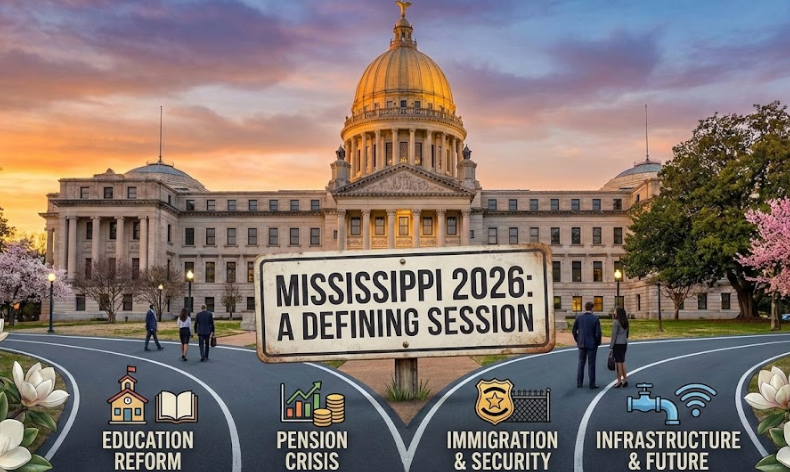
As Mississippi approaches the 2026 legislative session, the atmosphere in Jackson is shifting from routine governance to significant structural overhaul. The coming year promises to be a defining moment for the Magnolia State, with lawmakers poised to tackle a slate of issues that could fundamentally alter the state's educational landscape, legal framework, and fiscal health.
From the contentious debate over school choice to the looming crisis in the public pension system, here is a look at the legal and legislative battles that will define Mississippi in 2026.
The Battle for the Classroom
Perhaps the most visible ideological battleground in 2026 will be education. The legislature is gearing up for a renewed and aggressive push for "education freedom." This school choice initiative is built on the premise that public education funds should follow the student, allowing families to utilize state money for private or alternative schooling options.
While this is a top-tier priority for the House leadership, the path forward is far from smooth. Political analysts expect significant friction, particularly from the Senate, where concerns regarding the impact on traditional public school funding often lead to a more cautious approach.
Simultaneously, the courts are still weighing in on what can be taught and how programs are administered. A federal judge is currently considering a pause on bans regarding Diversity, Equity, and Inclusion (DEI) programs. The outcome of this litigation will likely set the tone for how educational institutions operate throughout the year.
Immigration: A State-Level Approach
While immigration is traditionally the domain of the federal government, Mississippi state officials are moving to take matters into their own hands in 2026.
The State Auditor has outlined a legislative priority list that includes criminalizing illegal immigration at the state level. The proposed measures would empower local law enforcement to make arrests without waiting for federal assistance. Furthermore, in a move to fund these enforcement efforts, there is a proposal to impose a fee on money transferred outside of the United States. This "remittance fee" is designed to generate revenue for a dedicated immigration enforcement grant fund, signaling a shift toward localized border security policy.
The Fiscal Cliff: PERS and Government Waste
Beyond the social issues, lawmakers face a massive mathematical challenge: the stability of the Public Employees' Retirement System (PERS).
The state’s pension system is facing significant unfunded liabilities, and ensuring its solvency is a non-negotiable item for the 2026 agenda. To address this, legislators are getting creative. One leading proposal involves diverting revenue from mobile sports betting to plug the financial gaps in the retirement fund.
Hand-in-hand with pension reform is a broader push for government efficiency. The State Auditor is championing a "trim the fat" approach to state assets. This includes:
- Fleet Management: A mandatory annual review of state vehicles, with a requirement to sell off those that are underutilized.
- Real Estate: New limits on the amount of office space allocated per employee to reduce rental and maintenance costs.
- Accountability: The reintroduction of the Whistleblower Reward Act, aimed at incentivizing state employees and citizens to report corruption by offering financial rewards.
Infrastructure and the Digital Frontier
In the capital city, the crisis is physical. Addressing the crumbling water and sewer infrastructure in Jackson remains a legal and practical quagmire. While previous years have seen emergency interventions, 2026 will require sustainable, long-term legislative solutions to ensure the city’s utility systems can support its residents and businesses.
Finally, the state is looking to the digital future—and the courts are looking with them. The Fifth Circuit Court of Appeals is currently hearing arguments regarding Mississippi’s state law on social media age verification. The ruling on this will determine how much power the state has to regulate online platforms in the name of child safety.
Looking Ahead
As 2026 draws near, Mississippi stands at a legislative fork in the road. With the dual pressures of maintaining fiscal solvency and navigating heated cultural debates, the decisions made in the Capitol corridors this year will likely resonate for decades to come.